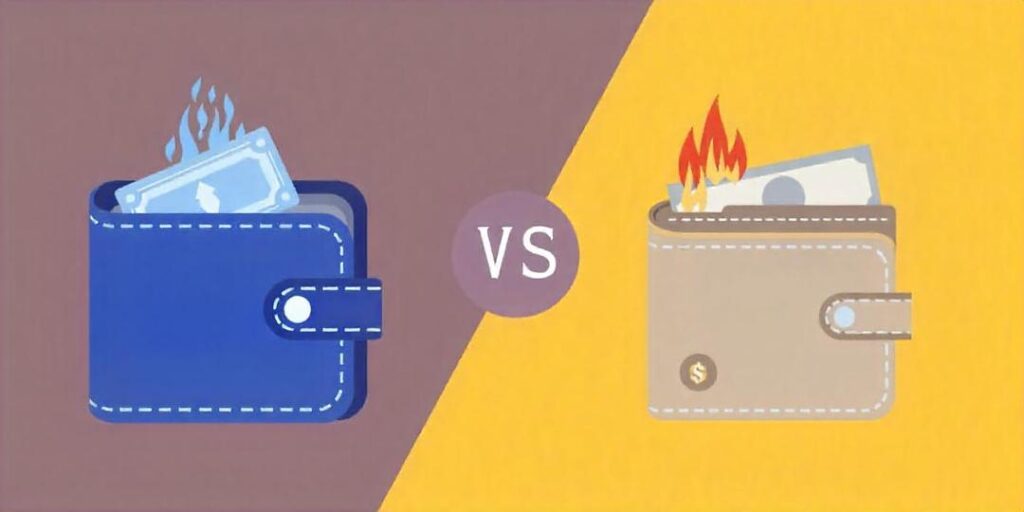
If you own cryptocurrencies like Bitcoin or Ethereum, you’ll need a wallet to store them. But not all wallets are the same! Let’s break down the two main types: hot wallets and cold wallets, and explain how to keep your crypto safe.
What is a Crypto Wallet?
A crypto wallet is like a digital safe that holds your cryptocurrency. Instead of holding physical money, it stores your private keys—the codes that let you access and manage your crypto.
There are two main types:
1. Hot Wallets (connected to the internet)
2. Cold Wallets (offline and not connected to the internet)
Hot Wallets: Easy and Convenient
A hot wallet is an online wallet connected to the internet. It’s great for quick and frequent transactions but can be more vulnerable to hacking.
Examples of Hot Wallets:
• Mobile wallets (e.g., Trust Wallet, MetaMask)
• Web wallets (e.g., wallets on crypto exchanges like Binance or Coinbase)
When to Use a Hot Wallet?
• If you trade or send crypto often.
• If you want convenience and quick access.
Example:
Let’s say you want to buy an NFT. You can connect your MetaMask wallet to an NFT marketplace and complete the transaction instantly.
Security Tips for Hot Wallets:
• Use two-factor authentication (2FA).
• Don’t store large amounts of crypto.
• Only use wallets from trusted providers.
Cold Wallets: Safe and Secure
A cold wallet is an offline wallet not connected to the internet. This makes it much safer from hacks but less convenient for frequent use.
Examples of Cold Wallets:
• Hardware wallets (e.g., Ledger, Trezor)
• Paper wallets (printed keys stored physically)
When to Use a Cold Wallet?
• If you’re holding crypto for a long time (like a savings account).
• If you want maximum security.
Example:
You bought 1 Bitcoin as a long-term investment. To keep it safe, you transfer it to a Ledger Nano S (a hardware wallet) and store the device in a secure place, like a safe.
Security Tips for Cold Wallets:
• Keep your wallet in a safe location.
• Back up your private keys.
• Never share your recovery phrase.
Hot vs. Cold Wallets: Key Differences
| Feature | Hot Wallet | Cold Wallet |
| Internet | Always connected | Offline |
| Convenience | High (easy access) | Low (less accessible) |
| Security | Lower (vulnerable to hacks) | Higher (safe from online attacks) |
| Best For | Frequent transactions | Long-term storage |
Conclusion
• Use hot wallets for convenience, small amounts, and frequent trades.
• Use cold wallets for security and long-term storage.
Think of it like this:
• Hot Wallet = Wallet in your pocket (easy but not as secure).
• Cold Wallet = A safe in your house (secure but less convenient).
For maximum security, consider using both: keep a small amount in a hot wallet for daily use and store the rest in a cold wallet for safekeeping!


